Archive for the ‘Issue Mapping’ Category
Dialogue Mapping: a book review
I’ll say it at the outset: once in a while there comes along a book that inspires and excites because it presents new perspectives on old, intractable problems. In my opinion, Dialogue Mapping : Building a Shared Understanding of Wicked Problems by Jeff Conklin falls into this category. This post presents an extensive summary and review of the book.
Before proceeding, I think it is only fair that I state my professional views (biases?) upfront. Some readers of this blog may have noted my leanings towards the “people side” of project management (see this post , for example). Now, that’s not to say that I don’t use methodologies and processes. On the contrary, I use project management processes in my daily work, and appreciate their value in keeping my projects (and job!) on track. My problem with processes is when they become the only consideration in managing projects. It has been my long-standing belief (supported by experience) that if one takes care of the people side of things, the right outcomes happen more easily; without undue process obsession on part of the manager. (I should clarify that I’m not encouraging some kind of a laissez-faire, process-free approach, merely one that balances both people and processes). I’ve often wondered if it is possible to meld these two elements into some kind of “people-centred process”, which leverages the collective abilities of people in a way that facilitates and encourages their participation. Jeff Conklin’s answer is a resounding “Yes!”
Dialogue mapping is a process that is aimed at helping groups achieve a shared understanding of wicked problems – complex problems that are hard to understand, let alone solve. If you’re a project manager that might make your ears perk up; developing a shared understanding of complex issues is important in all stages of a project: at the start, all stakeholders must arrive at a shared understanding of the project goals (eg, what are we trying to achieve in this project?); in the middle, project team members may need to come to a common understanding (and resolution) of tricky implementation issues; at the end, the team may need to agree on the lessons learned in the course of the project and what could be done better next time. But dialogue mapping is not restricted to project management – it can be used in any scenario involving diverse stakeholders who need to arrive at a common understanding of complex issues. This book provides a comprehensive introduction to the technique.
Although dialogue mapping can be applied to any kind of problem – not just wicked ones – Conklin focuses on the latter. Why? Because wickedness is one of the major causes of fragmentation: the tendency of each stakeholder to see a problem from his or her particular viewpoint ignoring other, equally valid, perspectives. The first chapter of this book discusses fragmentation and its relationship to wickedness and complexity. Fragmentation is a symptom of complexity- one would not have diverse, irreconcilable viewpoints if the issues at hand were simple. According to Conklin, fragmentation is a function of problem wickedness and social complexity, i.e. the diversity of stakeholders. Technical complexity is also a factor, but a minor one compared to the other two. All too often, project managers fall into the trap of assuming that technical complexity is the root cause of many of their problems, ignoring problem complexity (wickedness) and social complexity. The fault isn’t entirely ours; the system is partly to blame: the traditional, process driven world is partially blind to the non-technical aspects of complexity. Dialogue mapping helps surface issues that arise from these oft ignored dimensions of project complexity.
Early in the book, Conklin walks the reader through the solution process for a hypothetical design problem. His discussion is aimed at highlighting some limitations of the traditional approach to problem solving. The traditional approach is structured; it works methodically through gathering requirements, analysing them, formulating a solution and finally implementing it. In real-life, however, people tend to dive headlong into solving the problem. Their approach is far from methodical – it typically involves jumping back and forth between hypothesis formulation, solution development, testing ideas, following hunches etc. Creative work, like design, cannot be boxed in by any methodology, waterfall or otherwise. Hence the collective angst on how to manage innovative product development projects. Another aspect of complexity arises from design polarity; what’s needed (features requested) vs. what’s feasible(features possible) – sometimes called the marketing and development views. Design polarity is often the cause of huge differences of opinion within a team; that is, it manifests itself as social complexity.
Having set the stage in the first chapter, the rest of the book focuses on describing the technique of dialogue mapping. Conklin’s contention is that fragmentation manifests itself most clearly in meetings – be they project meetings, design meetings or company board meetings. The solution to fragmentation must, therefore, focus on meetings. The solution is for the participants to develop a shared understanding of the issues at hand, and a shared commitment to a decision and action plan that addresses them. The second chapter provides an informal discussion of how these are arrived at via dialogue that takes place in meetings. Dialogue mapping provides a process – yes, it is a process – to arrive at these.
The second chapter also introduces some of the elements that make up the process of dialogue mapping. The first of these is a visual notation called IBIS (Issue Based Information System). The IBIS notation was invented by Horst Rittel, the man who coined the term wicked problem. IBIS consists of three elements depicted in Figure 1 below – Issues (or questions), Ideas (that generally respond to questions) and Arguments (for and against ideas – pros and cons) – which can be connected according to a specified grammar (see this post for a quick introduction to IBIS or see Paul Culmsee’s series of posts on best practices for a longer, far more entertaining one). Questions are at the heart of dialogues (or meetings) that take place in organisations – hence IBIS, with its focus on questions, is ideally suited to mapping out meeting dialogues.
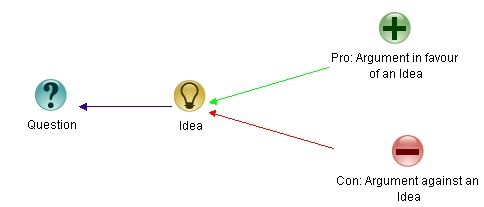
Figure 1: IBIS Elements
The basic idea in dialogue mapping is that a skilled facilitator maps out the core points of the dialogue in real-time, on a shared display which is visible to all participants. The basic idea is that participants see their own and collective contributions to the debate, while the facilitator fashions these into a coherent whole. Conklin’s believes that this can be done, no matter how complex the issues are or how diverse and apparently irreconcilable the opinions. Although I have limited experience with the technique, I believe he is right: IBIS in the hands of a skilled facilitator can help a group focus on the real issues, blowing away the conversational chaff. Although the group as a whole may not reach complete agreement, they will at least develop a real understanding of other perspectives. The third chapter, which concludes the first part of the book, is devoted to an example that illustrates this point.
The second part of the book delves into the nuts and bolts of dialogue mapping. It begins with an introduction to IBIS – which Conklin calls a “tool for all reasons.” The book provides a nice informal discussion, covering elements, syntax and conventions of the language. The coverage is good, but I have a minor quibble : one has to read and reread the chapter a few times to figure out the grammar of the language. It would have been helpful to have an overview of the grammar collected in one place (say in a diagram, like the one shown in Figure 2). Incidentally, Figures 1 and 2 also show how an IBIS map is structured: starting from a root question (placed on the left of the diagram) and building up to the right as the discussion proceeds.

Figure 2: Legal Links in IBIS
A good way to gain experience with IBIS is to use it to create issue maps of arguments presented in articles. See this post for an example of an issue map based on Fred Brooks’ classic article, No Silver Bullet.
Dialogue mapping is issue mapping plus facilitation. The next chapter – the fifth one in the book – discusses facilitation skills required for dialogue mapping. The facilitator (or technographer, as the person is sometimes called) needs to be able to listen to the conversation, guess at the intended meaning, write (or update) the map and validate what’s written; then proceed through the cycle of listening, guessing, writing and validating again as the next point comes up and so on. Conklin calls this the dialogue mapping listening cycle (see Figure 3 below). As one might imagine, this skill, which is the key to successful dialogue mapping, takes lots of practice to develop. In my experience, a good way to start is by creating IBIS maps of issues discussed in meetings involving a small number of participants. As one gains confidence through practice, one shares the display thereby making the transition from issue mapper to dialogue mapper.
One aspect of the listening cycle is counter-intuitive – validation may require the facilitator to interrupt the speaker. Conklin emphasises that it is OK to do so as long as it is done in the service of listening. Another important point is that when capturing a point made by someone, the technographer will need to summarise or interpret the point. The interpretation must be checked with the speaker. Hence validation – and the interruption it may entail – is not just OK, it is absolutely essential. Conklin also emphasises that the facilitator should focus on a single person in each cycle – it is possible to listen to only one person at a time.
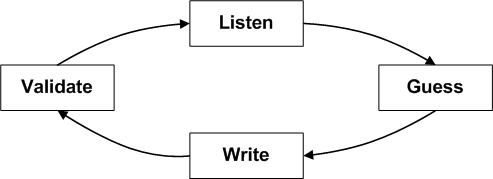
Figure 3: Dialogue Mapping Listening Cycle
A side benefit of interrruption is that it slows downs the dialogue. This is a good thing because everyone in the group gets more time to consider what’s on the screen and how it relates (or doesn’t) to their own thoughts. All too often, meetings are rushed, things are done in a hurry, and creative creative ideas and thoughts are missed in the bargain. A deliberate slowing down of the dialogue counters this.
The final part of the book – chapters six through nine – are devoted to advanced dialogue mapping skills.
The sixth chapter presents a discussion of the types of questions that arise in most meetings. Conklin identifies seven types of questions:
Deontic: These are questions that ask what should be done in order to deal with the issue at hand. For example: What should we do to improve our customer service? The majority of root questions (i.e. starting questions) in an IBIS map are deontic.
Instrumental: These are questions that ask how something should be done. For example: How can we improve customer service? These questions generally follow on from deontic questions. Typically root questions are either deontic or instrumental.
Criterial: These questions ask about the criteria that any acceptable ideas must satisfy. Typically ideas that respond to criterial questions will serve as a filter for ideas that might come up. Conklin sees criterial and instrumental questions as being complementary. The former specify high-level constraints (or criteria) for ideas whereas the latter are nuts-and-bolts ideas on how something is to be achieved. For example, a criterial question might ask: what are the requirements for improving customer service or how will we know that we have improved customer service.
Conklin makes the point that criterial questions typically connect directly to the root question. This makes sense: the main issue being discussed is usually subject ot criteria or constraints. Further, ideas that respond to criterial questions (in other words, the criteria) have a correspondence with arguments for and against the root questions. This makes sense: the pros and cons that come up in a meeting would generally correspond to the criteria that have been stated. This isn’t an absolute requirement – there’s nothing to say that all arguments must correspong to at least one criterion – but it often serves as a check on whether a discussion is taking all constraints into account.
Conceptual: These are questions that clarify the meaning of any point that’s raised. For example, what do we mean by customer service? Conklin makes the point that many meetings go round in circles because of differences in understanding of particular terms. Conceptual questions surface such differences.
Factual: These are questions of fact. For example: what’s the average turnaround time to respond to customer requests? Often meetings will debate such questions without having any clear idea of what the facts are. Once a factual question is identified as such, it can be actioned for someone to do research on it thereby saving a lot of pointless debate
Background: These are questions of context surrounding the issue at hand. An example is: why are we doing this initiative to improve customer service? Ideas responding to such questions are expected to provide the context as to why something has become an issue.
Stakeholder: These are the “who” questions. An example: who should be involved in the project? Such questions can be delicate in situations where there are conflicting interests (cross-functional project, say), but need to be asked in order to come up with a strategy to handle differences opinion. One can’t address everyone’s concerns until one knows who all constitute “everyone”.
Following the classification of questions, Conklin discusses the concept of a dialogue meta-map – an overall pattern of how certain kinds of questions naturally follow from certain others. The reader may already be able to discern some of these patterns from the above discussion of question types. Also relevant here are artful questions – open questions that keep the dialogue going in productive directions.
The seventh chapter is entitled Three Moves of Discourse. It describes three conversational moves that propel a discussion forward, but can also upset the balance of power in the discussion and evoke strong emotions. These moves are:
- Making an argument for an idea or proposal (a Pro)
- Making an argument against an idea (a Con)
- Challenging the context of the entire discussion.
Let’s look at the first two moves to start with. In an organisation, these moves have a certain stigma attached to them: anyone making arguments for or against an idea might be seen as being opinionated or egotistical. The reason is because these moves generally involve contradicting someone else in the room. Conklin contends that dialogue mapping takes removes these negative connotations because the move is seen as just another node in the map. Once on the map, it is no longer associated with any person – it is objectified as an element of the larger discussion. It can be discussed or questioned just as any other node can.
Conklin refers to the last move – challenging the context of a discussion – as “grenade throwing.” This is an apt way of describing such questions because they have the potential to derail the discussion entirely. They do this by challenging the relevance of the root question itself. But dialogue mapping takes these grenades in its stride; they are simply captured as any another conversational move – i.e. a node on the map, usually a question. Better yet, in many cases further discussion shows how these questions might connect up with the rest of the map. Even if they don’t, these “grenade questions” remain on the map, in acknowledgement of the dissenter and his opinion. Dialogue mapping handles such googlies (curveballs to baseball aficionados) with ease, and indicates how they might connect up with the rest of the discussion – but connection is neither required nor always desirable. It is OK to disagree, as long as it is done respectfully. This is a key element of shared understanding – the participants might not agree, but they understand each other.
Related to the above is the notion of a “left hand move”. Occasionally a discussion can generate a new root question which, by definition, has to be tacked on to the extreme left of the map. Such a left hand move is extremely powerful because it generally relates two or more questions or ideas that were previously unrelated (some of them may even have been seen as a grenade).
By now it should be clear that dialogue mapping is a technique that promotes collaboration – as such it works best in situations where openness, honesty and transparency are valued. In the penultimate chapter, the author discusses some situations in which it may not be appropriate to use the technique. Among these are meetings in which decisions are made by management fiat. Other situations in which it may be helpful to “turn the display off” are those which are emotionally charged or involve interpersonal conflict. Conklin suggests that the facilitator use his or her judgement in deciding where it is appropriate and where it isn’t.
In the final chapter, Conklin discusses how decisions are reached using dialogue mapping. A decision is simply a broad consensus to mark one of the ideas on the map as a decision. How does one choose the idea that is to be anointed as the group’s decision? Well quite obviously: the best one. Which one is that? Conklin states, the best decision is the one that has the broadest and deepest commitment to making it work. He also provides a checklist for figuring out whether a map is mature enough for a decision to be made. But the ultimate decision on when a decision (!) is to be made is up to group. So how does one know when the time is right for a decision? Again, the book provides some suggestions here, but I’ll say no more except to hint at them by paraphrasing from the book: “What makes a decision hard is lack of shared understanding. Once a group has thoroughly mapped a problem (issues) and its potential solutions (ideas) along with their pros and cons, the decision itself is natural and obvious.”
Before closing, I should admit that my experience with dialogue mapping is minimal – I’ve done it a few times in small groups. I’m not a brilliant public speaker or facilitator, but I can confirm that it helps keep a discussion focused and moving forward. Although Conklin’s focus is on dialogue mapping, one does not need to be a facilitator to benefit from this book; it also provides a good introduction to issue mapping using IBIS. In my opinion, this alone is worth the price of admission. Further, IBIS can also be used to augment project (or organisational) memory. So this book potentially has something for you, even if you’re not a facilitator and don’t intend to use IBIS in group settings.
This brings me to the end of my long-winded summary and review of the book. My discussion, as long as it is, does not do justice to the brilliance of the book. By summarising the main points of each chapter (with some opinions and annotations for good measure!), I have attempted to convey a sense of what a reader can expect from the book. I hope I’ve succeeded in doing so. Better yet, I hope I have convinced you that the book is worth a read, because I truly believe it is.
A visual addendum to “Why visual representations of reasoning are more effective than prose”
It’s always an honour to be referenced positively on other project management blogs, and it’s even better when the author provides helpful feedback. In a recent post, Andreas Heilwagen suggests that the arguments presented in my article entitled Why visual representations of reasoning are more effective than prose might be better made through visual representation. I reckon he is absolutely right. So here it is, an IBIS map summarising the main points of the post:
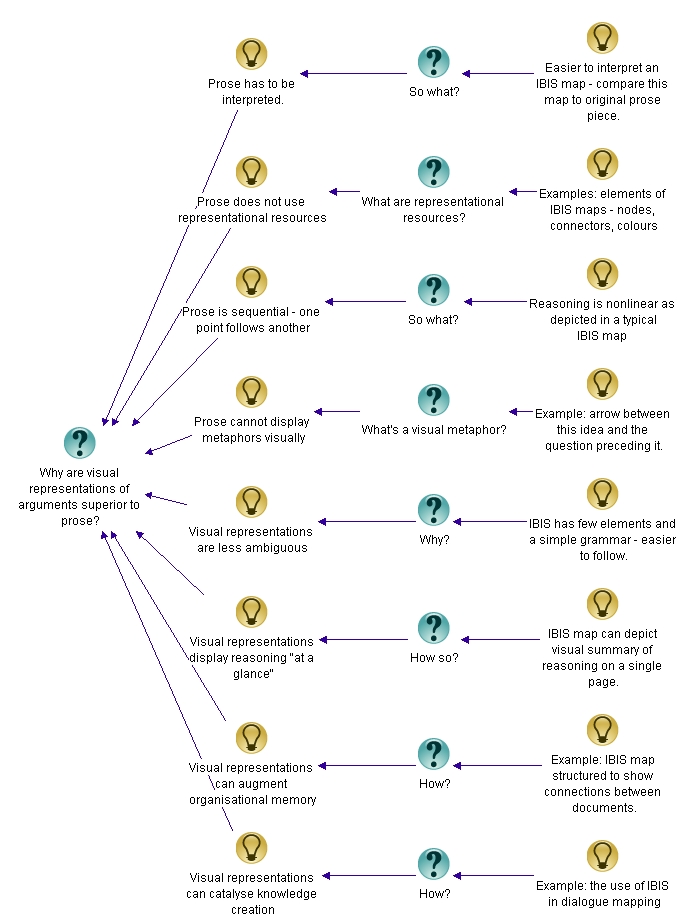
Figure 1: Why visual representations of reasoning are better than prose
Thanks Andreas, the title of the post demands that a visual representation accompany it. Further, the map serves to illustrate one of the main points made therein: the map it is but one interpretation of the post; there are many others, depending on how a reader might interpret or choose to emphasise what’s written. Prose is laden with ambiguity.
Postscript: I realise I may have misinterpreted Andreas’ post; my German is very rudimentary and Google translations are not the best. Even so, I think the article is better served by a map. .
Why visual representations of reasoning are more effective than prose
At work I’m often saddled with tasks that involve writing business documents such as project proposals, business cases, technology evaluations etc. Typically these are aimed at conveying positions or ideas to a specific audience. For example, a business case might detail the rationale behind (and hence the justification for) a project to executive management. The hardest part of composing these documents is the flow: how ideas are introduced, explained and transitioned one after the other. (Incidentally, writing business documents is composition – like music or art – let no one tell you otherwise.) The organisation of a document has to be carefully thought through because it is hard to convey complex, interconnected ideas in writing. Anyone who has laboured through a piece of reasoning in prose form is familiar with this problem. In an earlier post I discussed, via example, the utility of issue mapping – a visual representation of reasoning – in clarifying complex issues that are presented in writing. In this post I explore reasons why issue maps – or other visual representations of reasoning – are superior to prose when it comes to conveying ideas. Towards the end, I also highlight some potential uses of visual representations in project management.
The basic problem with prose is that the relationships between ideas are not immediately evident. In a paper entitled Enhancing Deliberation Through Computer Supported Argument Mapping Tim van Gelder states,
Extracting the structure of evidential relationships from reasoning as typically presented in prose is very difficult and most of the time we do it badly. This can be easily illustrated, in a kind of exercise we have done informally many times in workshops. Take any group of people sufficiently trained in reasoning and argument mapping that they are quite able to create argument maps to make explicit whatever reasoning they have in mind. Now give them a sample of good argumentative prose, such as a well-argued opinion piece from the newspaper. Ask them to figure out what the reasoning is, and to re-present it in an argument map. This usually takes about 20-30 minutes, during which time you can enjoy watching the participants strike various Rodinesque postures of intense concentration, wipe their sweaty palms, etc.. Then compare the resulting argument maps. You’ll find that you have as many different argument maps as there are people doing the exercise; in many cases the maps will be wildly different…
Although the paper is talks about argument mapping, the discussion applies just as well to issue mapping. He goes on to say,
Take any group of people sufficiently trained to be able to be read argument maps. (This training usually takes not more than a few minutes.) Present them with an argument map, and ask them to identify the reasoning presented in the map, and represent it in whatever form they like (map, prose, point-form etc.). This is a very simple task and usually takes almost no time; indeed, it is so trivial that the hard part is getting the participants to go through the motions when no intellectual challenge is involved. Ask them questions designed to elicit the extent to which they have correctly identified the structure of the reasoning presented by the map (e.g., how many distinct reasons are presented for the main conclusion?). You’ll find that they all understand exactly what the reasoning is, and ipso facto all have the same sense of the reasoning…
The point is simple: visual representations of reasoning are designed to present reasoning; prose isn’t.
Van Gelder then asks the question: why are visual representations better than prose? In answer, he makes the following points:
1. Prose has to be interpreted: As prose is not expressly designed to represent reasoning, readers have to decode relationships and connections between ideas. The choices they make will depend on individual interpretations of the meaning of words used and the grammatical structure of the piece. These interpretations will in turn depend on facility with the language, vocabulary etc. In contrast, visual notations such as IBIS (used in issue mapping) have few elements and very simple grammars. Simplicity slays ambiguity.
2. Prose neglects representational resources: Prose is a stream of words – it does not use other visual elements such as colour, shape, position or any graphical structures (trees, nodes, connectors). The brain processes comprehends such elements – and the visually apparent relationships between them – much faster than it can interpret prose. Hence the structured use of these can lead to faster comprehension. Van Gelder also adds that in the case of prose:
…Helpful authors (of prose) will assist readers in the difficult process of interpretation by providing verbal cues (for example, logical indicators such as “therefore”), although it is quite astonishing how frugal most authors are in providing such cues….
This is true, and I’d add that writers – particularly those who write analytical pieces – tend to be frugal because they are taught to be so.
3. Prose is sequential, arguments aren’t: Reasoning presented in written form flows linearly – i.e. concepts and ideas appear in sequence. A point that’s made on one page may be related to something that comes up five pages later, but the connections will not be immediately apparent unless the author specifically draws attention to it. Jeff Conklin makes the same point about conversations in this presentation: conversations are linear, one comment follows the other; however the issues that come up in a conversation are typically related in a non-linear way. Visual maps of reasoning expose these non-linear connections between issues in a very apparent and easy-to-follow way. See this map of a prose piece or this map of a conversation, for example.
4. Metaphors cannot be visually displayed in prose: According to the linguist / philosopher George Lakoff, metaphors are central to human understanding. Further, metaphors are grounded in our physical experience because our brains take input from the rest of our bodies (see this interview with Lakoff for more). For this reason, most of the metaphors we use to express reasoning relate to physical experience and sensation: strength or weakness of an argument, support for a position, weight of an idea, external pressure etc. Van Gelder claims that visual representations can depict these metaphors in a more natural way: for instance, in IBIS maps, cons are coloured red (Stop) whilst pros are green (Go).
The above points are taken from van Gelder’s paper, but I can think of a few more:
5. Visual representations have less ambiguity: All visual representations of reasoning that I’ve come across – mind maps, issue maps, argument maps etc – excel at displaying relationships between ideas in an unambiguous manner. One reason for this is that visual representations generally have a limited syntax and grammar, as a consequence of which a given relationship can be expressed in only a small number of ways (usually one!). Hence there is little or no ambiguity in depicting or interpreting relationships in a visual representation. This is not the case with prose, where much depends on the skill and vocabulary of the writer and reader.
6. Visual representations can present reasoning “at a glance”: A complex argument which takes up several pages of prose can often be captured in a single page using visual notations. Such visual representations -if properly constructed – are also more intuitive than the corresponding prose representation. See my post entitled, Beyond words: visualising arguments using issue maps for an example.
7. Visual representations can augment organisational memory A well structured archive of knowledge maps is so much more comprehensible than reams of documentation. Here are a couple of reasons why:
- Maps, unlike written documents, can capture the essence of a discussion minus all the conversational chaff.
- Maps can be structured to show the logical relationships or interconnections between multiple documents: i.e. as maps of organisational knowledge. Much like geographical maps, these can help knowledge workers navigate their way through vast tracts of organisational knowledge
See my post on knowledge capture using issue maps for much more on this.
8. Visual representations can catalyse knowledge creation: Visual representations, when used collaboratively, can catalyse the creation of knowledge. This is the basis of the technique of dialogue mapping – see this post for a simple example of dialogue mapping using IBIS. A visual representation serves as a focal point that captures a group’s collective reasoning and understanding of an issue as it evolves. Even more, the use of such representations in design discussions can foster creativity in much the same way as in art. In fact, Al Selvin refers to Compendium – the tool and methodology used in dialogue mapping – as an enabler of Knowledge Art. I’m currently reading some of Selvin’s writings on this, and will soon write a post summarising some of his ideas. Stay tuned.
If you’re a project manager and have read this far, perhaps you’re wondering how this stuff might be relevant to your day-to-day work. Well, in a couple of ways at least:
- Visual representations can serve as a succinct project memory. A practical way to start is by using issue mapping to capture meeting minutes. One can also use it to summarise meetings after they have taken place, but doing it in real-time is better because one can seek clarifications on the spot. Better still – project the map on to a screen and become a dialogue mapper.
- Maps can be used in real-time to to facilitate collaborative design – or create knowledge art – as discussed in point 8 above.
To summarise, then: visual representations of reasoning are more effective than prose because they are better at capturing the nonlinear structure of arguments; easier to interpret; leverage visual metaphors; depict relationships effectively and present arguments in a succinct yet intuitively appealing way. Above all, visual representations can facilitate collaborative creativity – something that prose simply cannot do.


 Eight to Late