Archive for the ‘Project Management’ Category
The map and the territory – a project manager’s reflections on the Seven Bridges Walk
Korzybski’s aphorism about the gap between the map and the territory tells a truth that is best understood by walking the territory.
The map
Some weeks ago my friend John and I did the Seven Bridges Walk, a 28 km affair organised annually by the NSW Cancer Council. The route loops around a section of the Sydney shoreline, taking in north shore and city vistas, traversing seven bridges along the way. I’d been thinking about doing the walk for some years but couldn’t find anyone interested enough to commit a Sunday. A serendipitous conversation with John a few months ago changed that.
John and I are both in reasonable shape as we are keen bushwalkers. However, the ones we do are typically in the 10 – 15 km range. Seven Bridges, being about double that, presented a higher order challenge. The best way to allay our concerns was to plan. We duly got hold of a map and worked out a schedule based on an average pace of 5 km per hour (including breaks), a figure that seemed reasonable at the time (Figure 1 – click on images to see full sized versions).

Figure 1:The map, the plan
Some key points:
- We planned to start around 7:45 am at Hunters Hill Village and have our first break at Lane Cove Village, around the 5 to 6 km from the starting point. Our estimated time for this section was about an hour.
- The plan was to take the longer, more interesting route (marked in green). This covered bushland and parks rather than roads. The detours begin at sections of the walk marked as “Decision Points” in the map, and add at a couple of kilometers to the walk, making it a round 30 km overall.
- If needed, we would stop at the 9 or 11 km mark (Wollstonecraft or Milson’s Point) for another break before heading on towards the city.
- We figured it would take us 4 to 5 hours (including breaks) to do the 18 km from Hunters Hill to Pyrmont Village in the heart of the city, so lunch would be between noon and 1 pm.
- The backend of the walk, the ~ 10 km from Pyrmont to Hunters Hill, would be covered at an easier pace in the afternoon. We thought this section would take us 2.5 to 3 hours giving us a finish time of around 4 pm.
A planned finish time of 4 pm meant we had enough extra time in hand if we needed it. We were very comfortable with what we’d charted out on the map.
The territory
We started on time and made our first crossing at around 8am: Fig Tree Bridge, about a kilometer from the starting point. John took this beautiful shot from one end, the yellow paintwork and purple Jacaranda set against the diffuse light off the Lane Cove River.
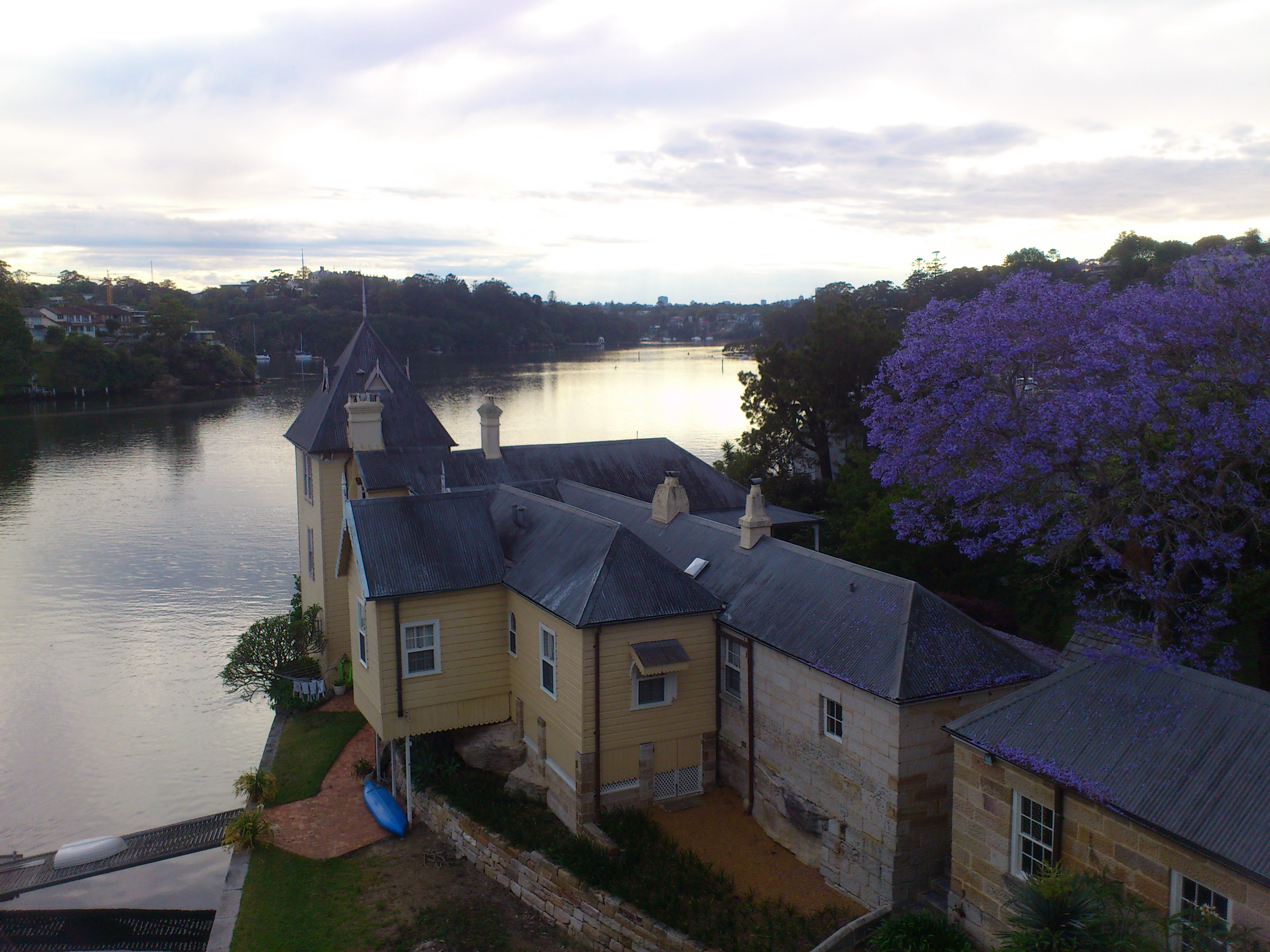
Figure 2: Lane Cove River from Fig Tree Bridge
Looking city-wards from the middle of the bridge, I got this one of a couple of morning kayakers.

Figure 3: Morning kayakers on the river
Scenes such as these convey a sense of what it was like to experience the territory, something a map cannot do. The gap between the map and the territory is akin to the one between a plan and a project; the lived experience of a project is very different from the plan, and is also unique to each individual. Jon Whitty and Bronte van der Hoorn explore this at length in a fascinating paper that relates the experience of managing a project to the philosophy of Martin Heidegger.
The route then took us through a number of steep (but mercifully short) sections in the Lane Cove and Wollstonecraft area. On researching these later, I was gratified to find that three are featured in the Top 10 Hill runs in Lane Cove. Here’s a Google Street View shot of the top ranked one. Though it doesn’t look like much, it’s not the kind of gradient you want to encounter in a long walk.

Figure 4: A bit of a climb
As we negotiated these sections, it occurred to me that part of the fun lay in not knowing they were coming up. It’s often better not to anticipate challenges that are an unavoidable feature of the territory and deal with them as they arise. Just to be clear, I’m talking about routine challenges that are part of the territory, not those that are avoidable or have the potential to derail a project altogether.
It was getting to be time for that planned first coffee break. When drawing up our plan, we had assumed that all seven starting points (marked in blue in the map in Figure 1) would have cafes. Bad assumption: the starting points were set off from the main commercial areas. In retrospect, this makes good sense: you don’t want to have thousands of walkers traipsing through a small commercial area, disturbing the peace of locals enjoying a Sunday morning coffee. Whatever the reason, the point is that a taken-for-granted assumption turned out to be wrong; we finally got our first coffee well past the 10 km mark.
Post coffee, as we continued city-wards through Lavender Street we got this unexpected view:
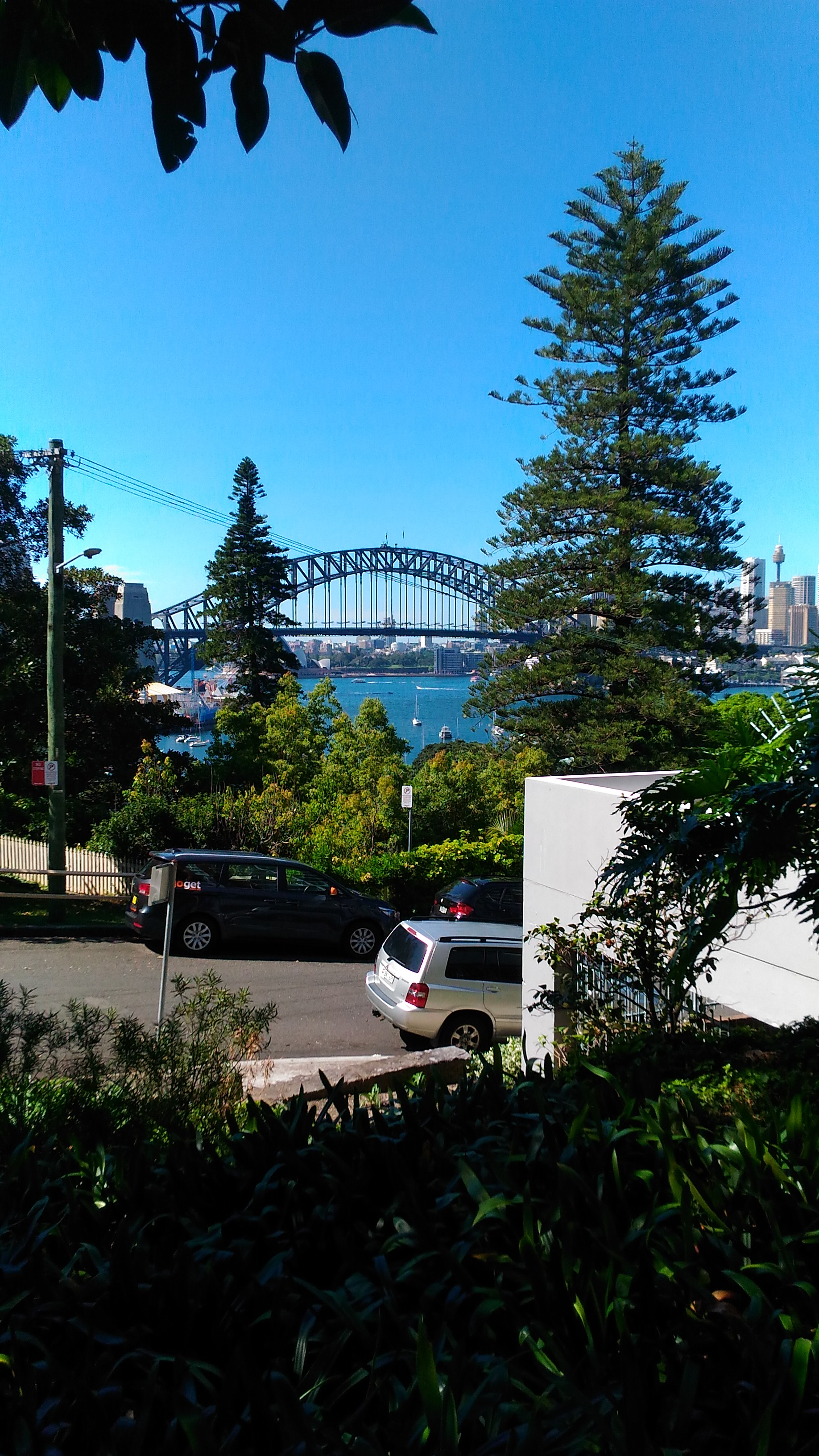
Figure 5: Harbour Bridge from Lavender St.
The view was all the sweeter because we realised we were close to the Harbour, well ahead of schedule (it was a little after 10 am).
The Harbour Bridge is arguably the most recognisable Sydney landmark. So instead of yet another stereotypical shot of it, I took one that shows a walker’s perspective while crossing it:

Figure 6: A pedestrian’s view of The Bridge
The barbed wire and mesh fencing detract from what would be an absolutely breathtaking view. According to this report, the fence has been in place for safety reasons since 1934! And yes, as one might expect, it is a sore point with tourists who come from far and wide to see the bridge.
Descriptions of things – which are but maps of a kind – often omit details that are significant. Sometimes this is done to downplay negative aspects of the object or event in question. How often have you, as a project manager, “dressed-up” reports to your stakeholders? Not outright lies, but stretching the truth. I’ve done it often enough.
The section south of The Bridge took us through parks surrounding the newly developed Barangaroo precinct which hugs the northern shoreline of the Sydney central business district. Another kilometer, and we were at crossing # 3, the Pyrmont Bridge in Darling Harbour:
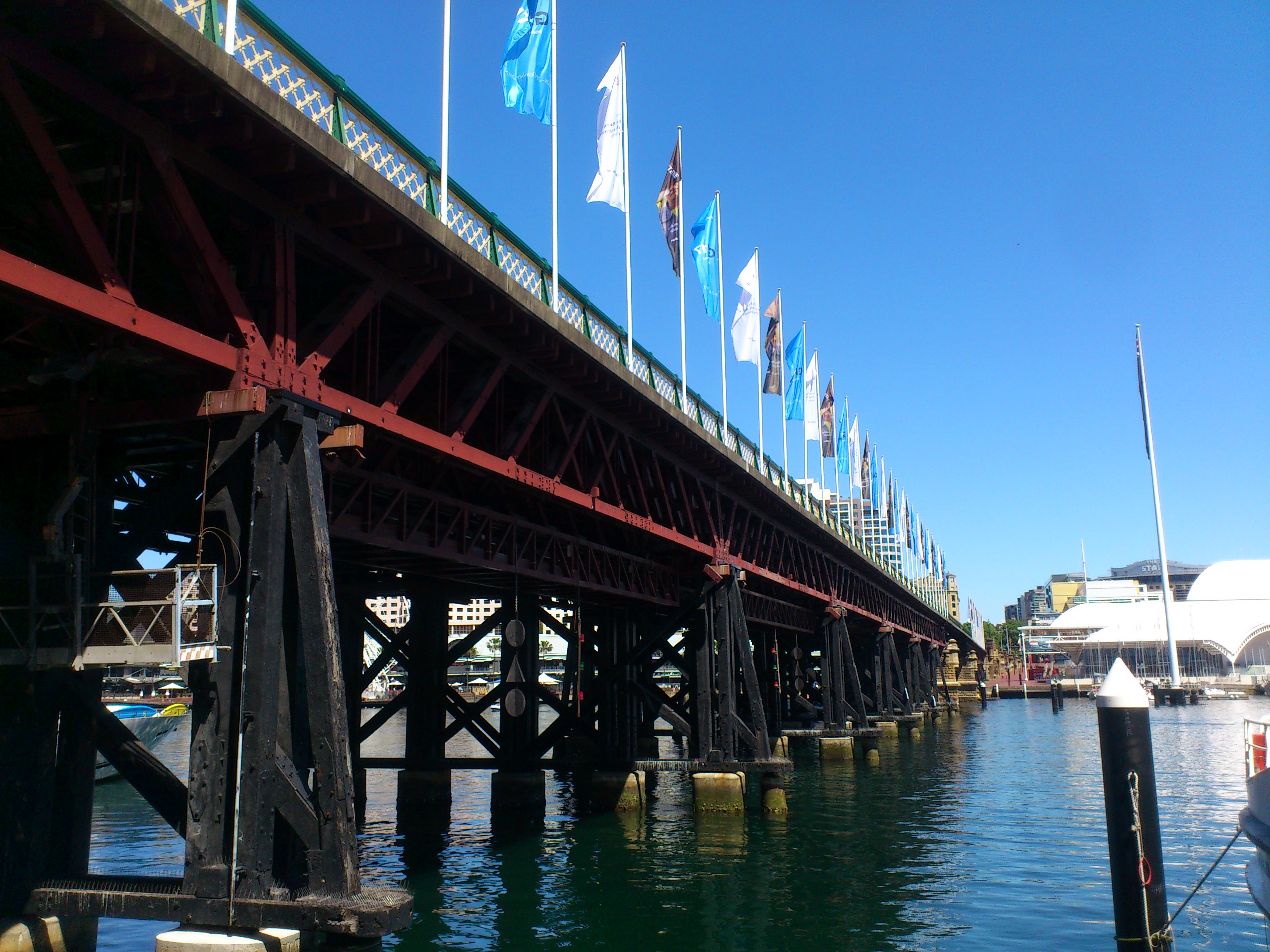
Figure 7: Pyrmont Bridge
Though almost an hour and half ahead of schedule, we took a short break for lunch at Darling Harbour before pressing on to Balmain and Anzac Bridge. John took this shot looking upward from Anzac Bridge:
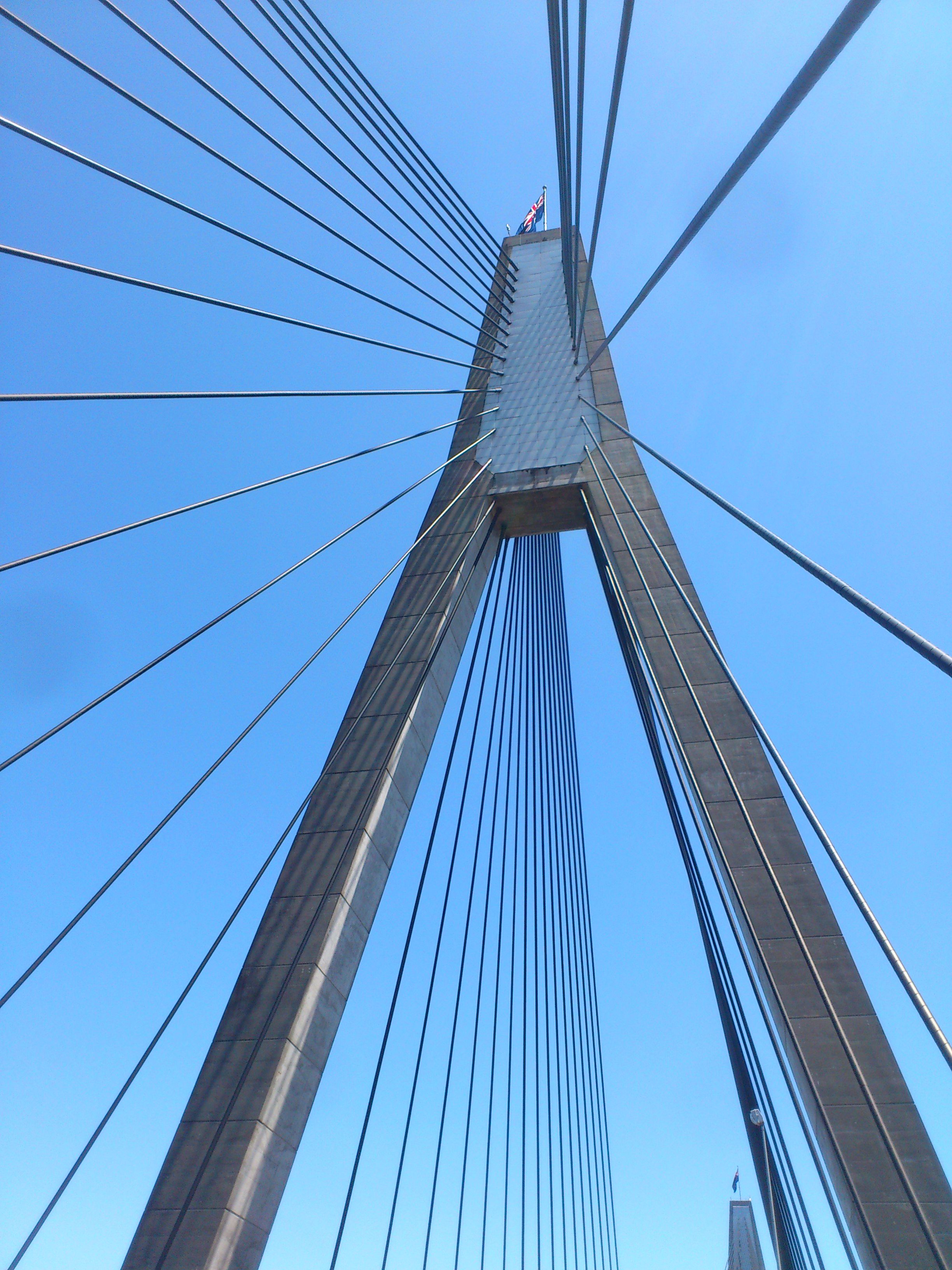
Figure: View looking up from Anzac Bridge
Commissioned in 1995, it replaced the Glebe Island Bridge, an electrically operated swing bridge constructed in 1903, which remained the main route from the city out to the western suburbs for over 90 years! As one might imagine, as the number of vehicles in the city increased many-fold from the 60s onwards, the old bridge became a major point of congestion. The Glebe Island Bridge, now retired, is a listed heritage site.
Incidentally, this little nugget of history was related to me by John as we walked this section of the route. It’s something I would almost certainly have missed had he not been with me that day. Journeys, real and metaphoric, are often enriched by travelling companions who point out things or fill in context that would otherwise be passed over.
Once past Anzac Bridge, the route took us off the main thoroughfare through the side streets of Rozelle. Many of these are lined by heritage buildings. Rozelle is in the throes of change as it is going to be impacted by a major motorway project.
The project reflects a wider problem in Australia: the relative neglect of public transport compared to road infrastructure. The counter-argument is that the relatively small population of the country makes the capital investments and running costs of public transport prohibitive. A wicked problem with no easy answers, but I do believe that the more sustainable option, though more expensive initially, will prove to be the better one in the long run.
Wicked problems are expected in large infrastructure projects that affect thousands of stakeholders, many of whom will have diametrically opposing views. What is less well appreciated is that even much smaller projects – say IT initiatives within a large organisation – can have elements of wickedness that can trip up the unwary. This is often magnified by management decisions made on the basis of short-term expediency.
From the side streets of Rozelle, the walk took us through Callan Park, which was the site of a psychiatric hospital from 1878 to 1994 (see this article for a horrifying history of asylums in Sydney). Some of the asylum buildings are now part of the Sydney College of The Arts. Pending the establishment of a trust to manage ongoing use of the site, the park is currently managed by the NSW Government in consultation with the local municipality.
Our fifth crossing of the day was Iron Cove Bridge. The cursory shot I took while crossing it does not do justice to the view; the early afternoon sun was starting to take its toll.

Figure 9: View from Iron Cove Bridge
The route then took us about a kilometer and half through the backstreets of Drummoyne to the penultimate crossing: Gladesville Bridge whose claim to fame is that it was for many years the longest single span concrete arch bridge in the world (another historical vignette that came to me via John). It has since been superseded by the Qinglong Railway Bridge in China.
By this time I was feeling quite perky, cheered perhaps by the realisation that we were almost done. I took time to compose perhaps my best shot of the day as we crossed Gladesville Bridge.

Figure 10: View from Gladesville Bridge
…and here’s one of the aforementioned arch, taken from below the bridge:
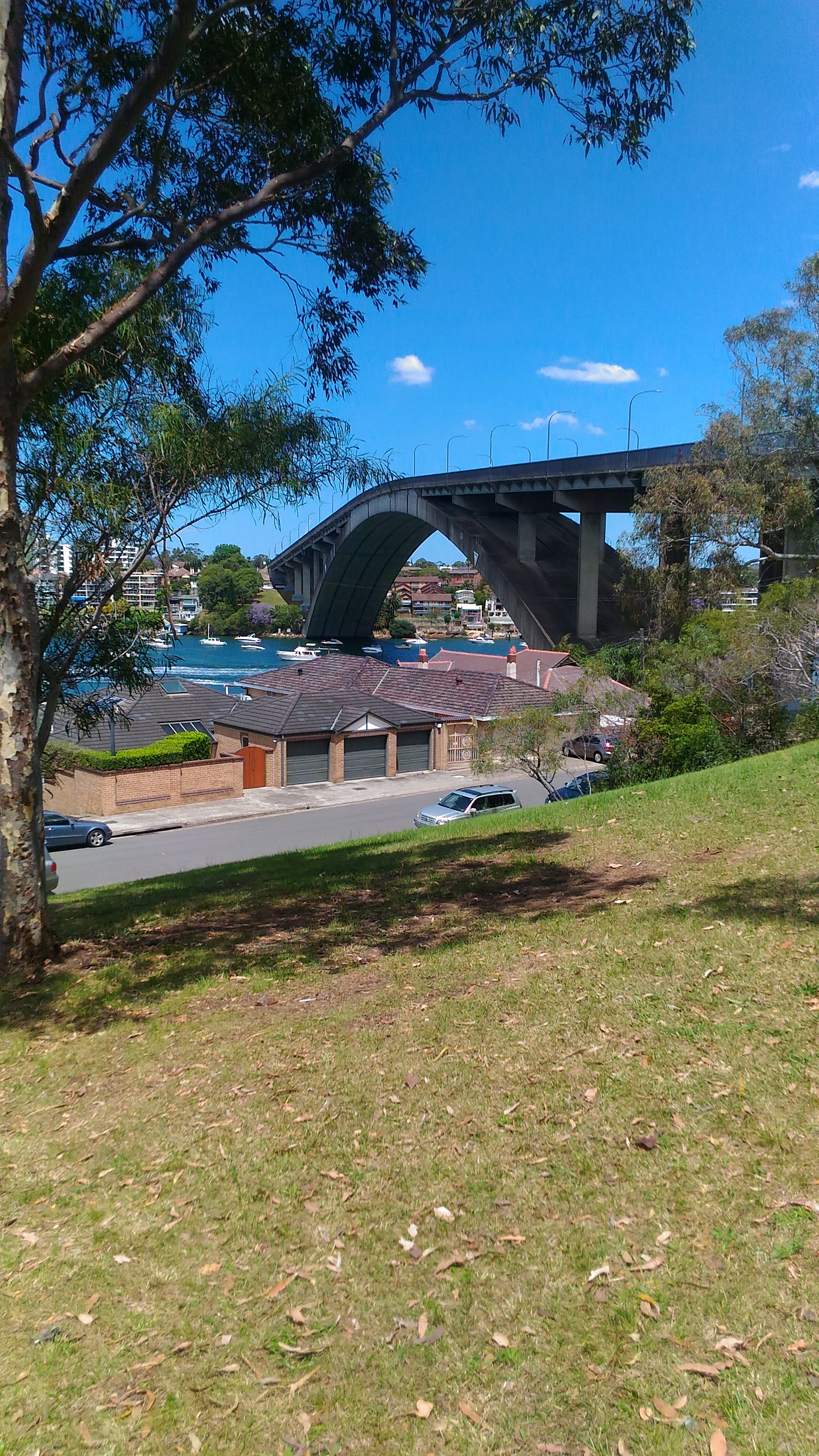
Figure 11: A side view of Gladesville Bridge
The final crossing, Tarban Creek Bridge was a short 100 metre walk from the Gladesville Bridge. We lingered mid-bridge to take a few shots as we realised the walk was coming to an end; the finish point was a few hundred metres away.
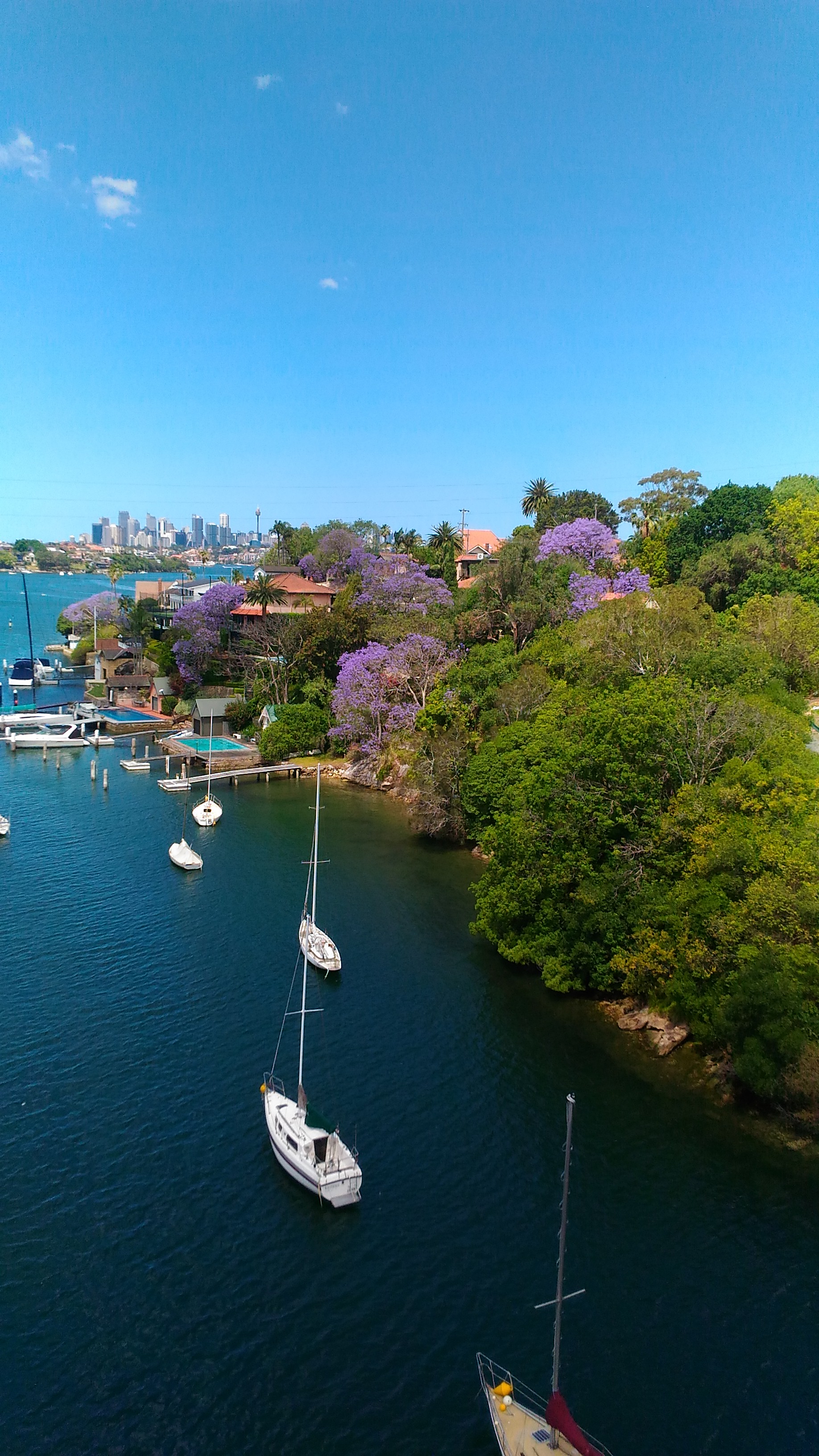
Figure 12: View from Tarban Creek Bridge
We duly collected our “Seven Bridges Completed” stamp at around 2:30 pm and headed to the local pub for a celebratory pint.

Figure 13: A well-deserved pint
Wrapping up
Gregory Bateson once wrote:
“We say the map is different from the territory. But what is the territory? Operationally, somebody went out with a retina or a measuring stick and made representations which were then put upon paper. What is on the paper map is a representation of what was in the retinal representation of the [person] who made the map; and as you push the question back, what you find is an infinite regress, an infinite series of maps. The territory never gets in at all. The territory is [the thing in itself] and you can’t do anything with it. Always the process of representation will filter it out so that the mental world is only maps of maps of maps, ad infinitum.”
One might think that a solution lies in making ever more accurate representations, but that is an exercise in futility. Indeed, as Borges pointed out in a short story:
“… In that Empire, the Art of Cartography attained such Perfection that the map of a single Province occupied the entirety of a City, and the map of the Empire, the entirety of a Province. In time, those Unconscionable Maps no longer satisfied, and the Cartographers Guilds struck a Map of the Empire whose size was that of the Empire, and which coincided point for point with it. The following Generations, who were not so fond of the Study of Cartography as their Forebears had been, saw that that vast map was Useless…”
Apart from being impossibly cumbersome, a complete map of a territory is impossible because a representation can never be the real thing. The territory remains forever ineffable; every encounter with it is unique and has the potential to reveal new perspectives.
This is as true for a project as it is for a walk or any other experience.
The law of requisite variety and its implications for enterprise IT
Introduction
There are two facets to the operation of IT systems and processes in organisations: governance, the standards and regulations associated with a system or process; and execution, which relates to steering the actual work of the system or process in specific situations.
An example might help clarify the difference:
The purpose of project management is to keep projects on track. There are two aspects to this: one pertaining to the project management office (PMO) which is responsible for standards and regulations associated with managing projects in general, and the other relating to the day-to-day work of steering a particular project. The two sometimes work at cross-purposes. For example, successful project managers know that much of their work is about navigate their projects through the potentially treacherous terrain of their organisations, an activity that sometimes necessitates working around, or even breaking, rules set by the PMO.
Governance and steering share a common etymological root: the word kybernetes, which means steersman in Greek. It also happens to be the root word of Cybernetics which is the science of regulation or control. In this post, I apply a key principle of cybernetics to a couple of areas of enterprise IT.
Cybernetic systems
An oft quoted example of a cybernetic system is a thermostat, a device that regulates temperature based on inputs from the environment. Most cybernetic systems are way more complicated than a thermostat. Indeed, some argue that the Earth is a huge cybernetic system. A smaller scale example is a system consisting of a car + driver wherein a driver responds to changes in the environment thereby controlling the motion of the car.
Cybernetic systems vary widely not just in size, but also in complexity. A thermostat is concerned only the ambient temperature whereas the driver in a car has to worry about a lot more (e.g. the weather, traffic, the condition of the road, kids squabbling in the back-seat etc.). In general, the more complex the system and its processes, the larger the number of variables that are associated with it. Put another way, complex systems must be able to deal with a greater variety of disturbances than simple systems.
The law of requisite variety
It turns out there is a fundamental principle – the law of requisite variety– that governs the capacity of a system to respond to changes in its environment. The law is a quantitative statement about the different types of responses that a system needs to have in order to deal with the range of disturbances it might experience.
According to this paper, the law of requisite variety asserts that:
The larger the variety of actions available to a control system, the larger the variety of perturbations it is able to compensate.
Mathematically:
V(E) > V(D) – V(R) – K
Where V represents variety, E represents the essential variable(s) to be controlled, D represents the disturbance, R the regulation and K the passive capacity of the system to absorb shocks. The terms are explained in brief below:
V(E) represents the set of desired outcomes for the controlled environmental variable: desired temperature range in the case of the thermostat, successful outcomes (i.e. projects delivered on time and within budget) in the case of a project management office.
V(D) represents the variety of disturbances the system can be subjected to (the ways in which the temperature can change, the external and internal forces on a project)
V(R) represents the various ways in which a disturbance can be regulated (the regulator in a thermostat, the project tracking and corrective mechanisms prescribed by the PMO)
K represents the buffering capacity of the system – i.e. stored capacity to deal with unexpected disturbances.
I won’t say any more about the law of requisite variety as it would take me to far afield; the interested and technically minded reader is referred to the link above or this paper for more.
Implications for enterprise IT
In plain English, the law of requisite variety states that only “variety can absorb variety.” As stated by Anthony Hodgson in an essay in this book, the law of requisite variety:
…leads to the somewhat counterintuitive observation that the regulator must have a sufficiently large variety of actions in order to ensure a sufficiently small variety of outcomes in the essential variables E. This principle has important implications for practical situations: since the variety of perturbations a system can potentially be confronted with is unlimited, we should always try maximize its internal variety (or diversity), so as to be optimally prepared for any foreseeable or unforeseeable contingency.
This is entirely consistent with our intuitive expectation that the best way to deal with the unexpected is to have a range of tools and approaches at ones disposal.
In the remainder of this piece, I’ll focus on the implications of the law for an issue that is high on the list of many corporate IT departments: the standardization of IT systems and/or processes.
The main rationale behind standardizing an IT process is to handle all possible demands (or use cases) via a small number of predefined responses. When put this way, the connection to the law of requisite variety is clear: a request made upon a function such as a service desk or project management office (PMO) is a disturbance and the way they regulate or respond to it determines the outcome.
Requisite variety and the service desk
A service desk is a good example of a system that can be standardized. Although users may initially complain about having to log a ticket instead of calling Nathan directly, in time they get used to it, and may even start to see the benefits…particularly when Nathan goes on vacation.
The law of requisite variety tells us successful standardization requires that all possible demands made on the system be known and regulated by the V(R) term in the equation above. In case of a service desk this is dealt with by a hierarchy of support levels. 1st level support deals with routine calls (incidents and service requests in ITIL terminology) such as system access and simple troubleshooting. Calls that cannot be handled by this tier are escalated to the 2nd and 3rd levels as needed. The assumption here is that, between them, the three support tiers should be able to handle majority of calls.
Slack (the K term) relates to unexploited capacity. Although needed in order to deal with unexpected surges in demand, slack is expensive to carry when one doesn’t need it. Given this, it makes sense to incorporate such scenarios into the repertoire of the standard system responses (i.e the V(R) term) whenever possible. One way to do this is to anticipate surges in demand and hire temporary staff to handle them. Another way is to deal with infrequent scenarios outside the system- i.e. deem them out of scope for the service desk.
Service desk standardization is thus relatively straightforward to achieve provided:
- The kinds of calls that come in are largely predictable.
- The work can be routinized.
- All non-routine work – such as an application enhancement request or a demand for a new system- is dealt with outside the system via (say) a change management process.
All this will be quite unsurprising and obvious to folks working in corporate IT. Now let’s see what happens when we apply the law to a more complex system.
Requisite variety and the PMO
Many corporate IT leaders see the establishment of a PMO as a way to control costs and increase efficiency of project planning and execution. PMOs attempt to do this by putting in place governance mechanisms. The underlying cause-effect assumption is that if appropriate rules and regulations are put in place, project execution will necessarily improve. Although this sounds reasonable, it often does not work in practice: according to this article, a significant fraction of PMOs fail to deliver on the promise of improved project performance. Consider the following points quoted directly from the article:
- “50% of project management offices close within 3 years (Association for Project Mgmt)”
- “Since 2008, the correlated PMO implementation failure rate is over 50% (Gartner Project Manager 2014)”
- “Only a third of all projects were successfully completed on time and on budget over the past year (Standish Group’s CHAOS report)”
- “68% of stakeholders perceive their PMOs to be bureaucratic (2013 Gartner PPM Summit)”
- “Only 40% of projects met schedule, budget and quality goals (IBM Change Management Survey of 1500 execs)”
The article goes on to point out that the main reason for the statistics above is that there is a gap between what a PMO does and what the business expects it to do. For example, according to the Gartner review quoted in the article over 60% of the stakeholders surveyed believe their PMOs are overly bureaucratic. I can’t vouch for the veracity of the numbers here as I cannot find the original paper. Nevertheless, anecdotal evidence (via various articles and informal conversations) suggests that a significant number of PMOs fail.
There is a curious contradiction between the case of the service desk and that of the PMO. In the former, process and methodology seem to work whereas in the latter they don’t.
Why?
The answer, as you might suspect, has to do with variety. Projects and service requests are very different beasts. Among other things, they differ in:
- Duration: A project typically goes over many months whereas a service request has a lifetime of days,
- Technical complexity: A project involves many (initially ill-defined) technical tasks that have to be coordinated and whose outputs have to be integrated. A service request typically consists one (or a small number) of well-defined tasks.
- Social complexity: A project involves many stakeholder groups, with diverse interests and opinions. A service request typically involves considerably fewer stakeholders, with limited conflicts of opinions/interests.
It is not hard to see that these differences increase variety in projects compared to service requests. The reason that standardization (usually) works for service desks but (often) fails for PMOs is that the PMOs are subjected a greater variety of disturbances than service desks.
The key point is that the increased variety in the case of the PMO precludes standardisation. As the law of requisite variety tells us, there are two ways to deal with variety: regulate it or adapt to it. Most PMOs take the regulation route, leading to over-regulation and outcomes that are less than satisfactory. This is exactly what is reflected in the complaint about PMOs being overly bureaucratic. The solution simple and obvious solution is for PMOs to be more flexible– specifically, they must be able to adapt to the ever changing demands made upon them by their organisations’ projects. In terms of the law of requisite variety, PMOs need to have the capacity to change the system response, V(R), on the fly. In practice this means recognising the uniqueness of requests by avoiding reflex, cookie cutter responses that characterise bureaucratic PMOs.
Wrapping up
The law of requisite variety is a general principle that applies to any regulated system. In this post I applied the law to two areas of enterprise IT – service management and project governance – and discussed why standardization works well for the former but less satisfactorily for the latter. Indeed, in view of the considerable differences in the duration and complexity of service requests and projects, it is unreasonable to expect that standardization will work well for both. The key takeaway from this piece is therefore a simple one: those who design IT functions should pay attention to the variety that the functions will have to cope with, and bear in mind that standardization works well only if variety is known and limited.
Improving decision-making in projects
An irony of organisational life is that the most important decisions on projects (or any other initiatives) have to be made at the start, when ambiguity is at its highest and information availability lowest. I recently gave a talk at the Pune office of BMC Software on improving decision-making in such situations.
The talk was recorded and simulcast to a couple of locations in India. The folks at BMC very kindly sent me a copy of the recording with permission to publish it on Eight to Late. Here it is:
Based on the questions asked and the feedback received, I reckon that a number of people found the talk useful. I’d welcome your comments/feedback.
Acknowledgements: My thanks go out to Gaurav Pal, Manish Gadgil and Mrinalini Wankhede for giving me the opportunity to speak at BMC, and to Shubhangi Apte for putting me in touch with them. Finally, I’d like to thank the wonderful audience at BMC for their insightful questions and comments.


 Eight to Late